
MiCA (Markets in Crypto-Assets) is the EU's new rulebook for crypto, designed to create a single, clear legal framework for crypto-assets across all member states. Adopted to address fragmented national approaches, MiCA will be fully implemented by December 2025 and aims to increase consumer protection, market integrity, and legal certainty for crypto businesses and investors in the European Union.
Before MiCA, Europe's crypto ecosystem looked like a patchwork: different countries applied different rules, making cross-border services complex and risky. MiCA standardises requirements for issuers, service providers, and stablecoins, so platforms licensed in one EU country can operate more easily across the bloc.
MiCA applies to crypto-assets not already covered by existing EU financial services laws, including many utility tokens, asset-referenced tokens, and issuer-backed stablecoins. The regulation recognises that crypto-assets are a distinct category that require bespoke rules, not simply extensions of securities or e‑money legislation.
The push for MiCA accelerated after high-profile industry failures such as FTX in 2022, which eroded trust and highlighted the need for unified safeguards. MiCA aims to rebuild market confidence by enforcing prudential rules, governance standards, and clearer liability for crypto service providers.
As Denmark's first platform to receive comprehensive CASP authorisation from the Danish Financial Supervisory Authority (FSA), Penning is already aligned with MiCA's goals. Our FSA-approved portfolio management services and CASP licence position Penning to offer regulated, cross-border crypto services across the EU providing an alternative to unregulated offshore exchanges and limited neo-bank offerings.
The platform name must comply with MiCA naming and marketing rules; our choice, "Penning," reflects a blend of Nordic financial tradition and modern digital asset innovation rooted in the oldest payment denomination in medieval Scandinavia.
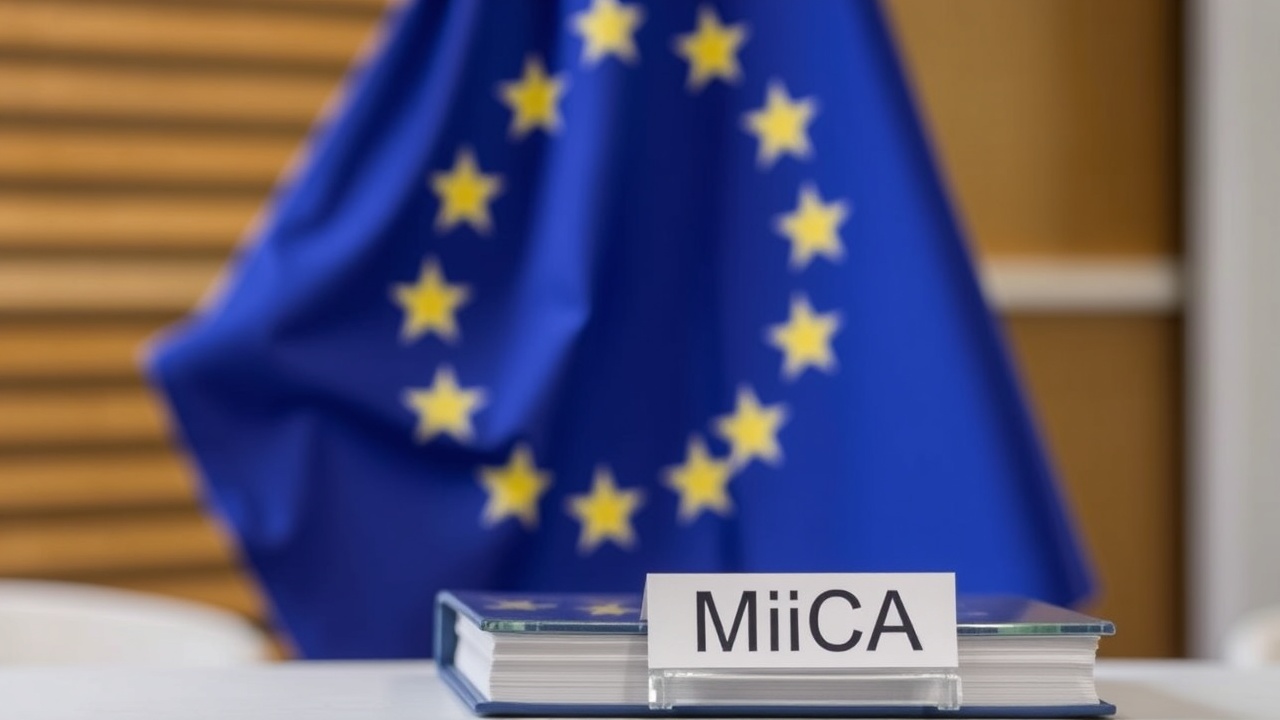
MiCA, which stands for Markets in Crypto-Assets regulation, is a cornerstone of the EU's approach to crypto regulation. This regulation on markets in crypto-assets seeks to harmonize the rules for crypto assets across the EU member states. It provides a legal framework for crypto markets, addressing the previously fragmented regulatory landscape. MiCA aims to regulate crypto-assets that are not currently covered by existing EU financial services legislation. The ultimate goal is to foster innovation in the crypto space while ensuring investor protection and maintaining financial stability within the European Union.
The MiCA regulation has several key objectives:
A robust legal framework for crypto is essential for fostering trust and confidence in the crypto markets. The absence of clear rules can lead to uncertainty, hindering the development and adoption of crypto-assets. MiCA authorisation and supervision by competent authorities ensures that crypto-asset service providers adhere to certain standards, reducing the risk of fraud and manipulation.
Consider the alternative. Without clear rules, consumers face heightened risks of fraud, market manipulation, and loss. Legitimate businesses struggle to access banking services because financial institutions cannot assess regulatory risk. Institutional investors remain on the sidelines, unable to satisfy their compliance departments that crypto investments meet fiduciary standards. The collapses of FTX, Celsius, and other platforms demonstrated precisely what happens when crypto operates outside robust regulatory frameworks.
This Markets in Crypto-Assets regulation provides a level playing field for CASPs, promoting fair competition and investor protection. The passporting mechanism amplifies these benefits significantly. A platform authorised as a CASP in Denmark can serve customers across all 30 European Economic Area countries without obtaining separate licenses in each jurisdiction. This dramatically reduces the cost and complexity of pan-European expansion, enabling compliant platforms to achieve the scale necessary to compete with global players.
The EU seeks to create a secure and innovative environment for crypto-assets across the EU with this regulation. By establishing minimum standards for capital, governance, and operational procedures, MiCA raises the barrier to entry for bad actors while providing compliant platforms with a mark of quality that distinguishes them from unregulated competitors.

The Markets in Crypto-Assets regulation provides a clear definition of crypto assets, distinguishing them from traditional financial instruments and e-money, and it covers crypto-assets across all member states. This definition is crucial for determining which assets fall under the MiCA regulation and which are subject to other applicable national financial regulations.
MiCA classifies crypto assets into distinct categories, each with specific regulatory requirements. This categorisation matters enormously because different asset types face different regulatory requirements based on their characteristics and risk profiles.
Asset-Referenced Tokens (ARTs) represent crypto-assets that purport to maintain a stable value by referencing multiple currencies, commodities, or other crypto-assets. These are the classic "stablecoins" that have become essential infrastructure for crypto markets. Because of their systemic importance and the financial stability risks they can pose, ARTs face the most stringent requirements under MiCA, including substantial reserve requirements and enhanced regulatory oversight.
E-Money Tokens (EMTs) are crypto-assets that reference a single fiat currency and function as a means of exchange. Think of them as the digital equivalent of electronic money, but operating on blockchain infrastructure. Issuers of EMTs must be authorised as electronic money institutions or credit institutions, bringing these tokens firmly within the perimeter of traditional financial regulation.
Other Crypto-Assets encompass the vast majority of tokens that don't fit the ART or EMT categories. This includes utility tokens that provide access to goods or services, as well as cryptocurrencies like Bitcoin and Ethereum that function primarily as stores of value or mediums of exchange. While subject to lighter requirements than ARTs or EMTs, issuers and service providers dealing with these virtual assets must still comply with MiCA's disclosure and operational standards.
This categorisation system enables proportionate regulation, applying more intensive oversight to assets that pose greater risks while avoiding unnecessarily burdensome requirements for lower-risk tokens. It helps competent authorities to regulate and supervise digital assets effectively, ensuring a consistent legal framework across the EU.
Under MiCA, issuers of digital assets, including asset-referenced tokens and e-money tokens, bear significant responsibilities to ensure investor protection and maintain financial stability:
The European Commission ensures that these requirements promote transparency and accountability within the crypto markets across the EU.
Market participants, including crypto-asset service providers (CASPs), must adhere to stringent compliance requirements under the Markets in Crypto-Assets regulation to operate legally within the EU member states:
Supervision by competent authorities ensures compliance across the EU.
At Penning, we view MiCA compliance not as a burden but as a competitive advantage in the rapidly evolving capital markets landscape. Our authorisation from the Danish FSA represents months of rigorous review covering every aspect of our operations. We utilise segregated wallets and institutional-grade security protocols to safeguard client assets related to crypto-assets. Unlike unregulated platforms, we operate under EU supervision with clear accountability to our regulator. For investors, this means the security and transparency they expect from traditional financial services, combined with access to the digital asset economy.
The implementation of MiCA involves several key milestones marking the full application of the regulation. Understanding this timeline is essential for anyone operating in or investing through European crypto markets.
The regulation entered into force in June 2023, triggering a preparation period during which the European Securities and Markets Authority (ESMA) and European Banking Authority (EBA) developed the technical standards necessary for consistent implementation across member states.
In 2024, national competent authorities across the EU member states were setting up interim registration systems for crypto-asset service providers (CASPs), allowing them to provide crypto-asset services during the transition period.
The Markets in digital assets regulation is now in a phase of MiCA transitional periods, with the full application marking the point at which only authorised entities may offer crypto-asset services within the EU. Unlicensed platforms lose their ability to serve European customers, creating significant competitive advantages for early movers who secured authorisation during the transition period.
EU member states are likely to face several challenges in implementing the Markets in Crypto-Assets regulation effectively.
Adapting National Laws: Adapting national laws to align with MiCA requires legislative and regulatory action in each member state. Some countries already had robust crypto-specific regulations that need reconciling with the new EU framework. Others had minimal rules and must build regulatory infrastructure essentially from scratch.
Resource Constraints: Ensuring sufficient resources for competent authorities to supervise CASPs presents ongoing challenges. Crypto-assets present unique supervisory challenges, requiring regulators to develop expertise in blockchain technology, decentralised finance, and the specific risks associated with digital assets.
Cross-Border Complexity: Addressing the complexities of cross-border crypto-asset activities creates coordination challenges. A CASP authorised in one member state can passport its services across the entire EU, but practical questions arise about how home and host authorities share supervisory responsibilities.
Technical Standards Interpretation: Some member states may also encounter difficulties in interpreting and applying the technical standards developed by ESMA and EBA. Overcoming these challenges is essential for achieving the objectives of the Markets in Crypto-Assets regulation and ensuring a harmonized approach to crypto regulation across the EU.
To achieve effective MiCA compliance, crypto firms should adopt proactive strategies:
Gap Analysis: Conducting a thorough assessment of current operations to identify gaps in compliance represents the essential first step. This analysis should cover authorisation requirements, capital positions, governance arrangements, operational procedures, and disclosure practices.
Compliance Infrastructure Investment: Investing in robust compliance systems and processes pays dividends beyond mere regulatory box-ticking. Systems for customer due diligence, transaction monitoring, and record-keeping not only satisfy regulatory requirements but also build operational resilience and customer trust.
Expert Guidance: Seeking expert legal advice to navigate the complexities of the MiCA regulation helps firms avoid costly mistakes related to crypto-assets.
Regulatory Engagement: Firms should actively engage with competent authorities and participate in industry initiatives to stay informed about regulatory developments and best practices.

The Markets in Crypto-Assets regulation sets the EU apart with its comprehensive legal framework, a stark contrast to the fragmented approaches seen globally.
United States: The United States continues to regulate crypto primarily through existing securities and commodities laws, leading to ongoing uncertainty about which assets fall under which regulator's jurisdiction. The Securities and Exchange Commission (SEC) and Commodity Futures Trading Commission (CFTC) have asserted overlapping claims, while Congress has yet to pass comprehensive crypto legislation.
United Kingdom: The United Kingdom, post-Brexit, has developed its own approach that differs from MiCA in several important respects. While the UK has implemented anti-money laundering rules for crypto businesses, a comprehensive regulatory framework comparable to MiCA remains under development.
Asian Markets: Asian markets present varied pictures. Singapore has developed a robust licensing regime for crypto service providers, while Hong Kong has moved from a restrictive stance toward greater openness. Japan, an early mover on crypto regulation following the Mt. Gox collapse, continues to refine its approach.
This positions the European Union as a leader in crypto regulation, potentially influencing global standards. Just as the EU's General Data Protection Regulation (GDPR) influenced privacy laws worldwide, MiCA may shape crypto regulation in other jurisdictions.
Market Consolidation: The Markets in Crypto-Assets regulation requirements will likely drive out less scrupulous actors, leading to a more professionalized industry. The compliance costs associated with CASP authorisation create barriers that smaller players cannot easily surmount. We are witnessing a wave of mergers and acquisitions as smaller platforms seek shelter under the compliance umbrellas of larger, licensed entities.
Investor Confidence: For investors, MiCA creates an environment of enhanced trust and transparency. The requirement for comprehensive disclosure, combined with regulatory oversight of service providers, reduces information asymmetries that historically disadvantaged retail participants. As comfort with the regulatory environment grows, institutional capital that has remained on the sidelines may enter the market.
DeFi Expansion: Decentralised Finance (DeFi) presents the most obvious area where MiCA's current scope may prove insufficient. The regulation was designed primarily for centralised intermediaries, and its application to truly decentralised protocols raises fundamental questions. The European Commission has already signalled that DeFi-specific rules will follow.
NFT Coverage: The European Commission may also consider expanding the scope of MiCA to address Non-Fungible Tokens more comprehensively. While MiCA generally excludes unique digital assets that aren't fungible, the boundaries between NFTs and other crypto-assets can blur.

MiCA represents a pivotal moment in the regulation of cryptocurrencies, establishing a comprehensive legal framework within the European Union. By mandating MiCA authorisation, detailed crypto-asset white papers, and rigorous compliance standards for crypto-asset service providers, MiCA seeks to balance innovation with investor protection.
The regulation arrived at a critical juncture for the crypto industry. Trust had been severely damaged by platform collapses and fraud. Institutional adoption remained limited by regulatory uncertainty. Legitimate businesses struggled to distinguish themselves from bad actors. MiCA addresses each of these challenges by creating enforceable standards that separate compliant operators from those unwilling or unable to meet professional requirements.
Post-2026, after the full application of MiCA, several developments are possible. We might see further harmonization of crypto regulation among EU member states, building on the foundation laid by the Regulation on Markets in Crypto-Assets.
ESMA and the European Banking Authority will likely continue refining technical standards, adapting to new crypto innovations and addressing any unforeseen issues.
The European Commission may also explore expanding MiCA's scope to cover decentralized finance (DeFi) or non-fungible tokens (NFTs) more comprehensively, adapting to the evolving crypto market landscape.
For EU member states, the path forward involves continued collaboration and proactive adaptation to the Markets in Crypto-Assets regulation.
National competent authorities must work closely with ESMA and the European Banking Authority to ensure consistent supervisory practices. Member states should also foster dialogue with crypto firms to understand their challenges and facilitate smooth MiCA compliance.
For individual investors considering cryptocurrencies, MiCA fundamentally changes your relationship with the platforms you use.
Asset segregation requirements mean your holdings must be kept separate from the platform's own assets. If a service provider faces financial difficulties, your crypto shouldn't be tangled up in bankruptcy proceedings. Disclosure requirements ensure you receive clear, comprehensive information about the risks associated with any cryptocurrencies you purchase.
Complaint handling procedures give you recourse when things go wrong. Licensed CASPs must maintain effective processes for addressing customer concerns, and unresolved issues can be escalated to competent authorities.
Penning is Denmark's first platform to receive comprehensive MiCA authorisation, combining CASP licensing with FSA-approved portfolio management. We offer three core services: Trade (crypto trading with 50+ assets), Invest (professionally managed portfolios with Save, Grow, and Trade strategies), and Swap (seamless cross-chain exchange without bridges or gas fees).
Our mission is to be the go-to regulated platform to trade, swap, and invest in crypto across the Nordics and Europe. Unlike unregulated offshore exchanges or limited neobank offerings, Penning provides true asset ownership, FSA-approved investment products, and Danish tax integration backed by Denmark's first CASP license.
Penning ApS is licensed by the Danish Financial Supervisory Authority as a Crypto-Asset Service Provider under MiCA regulation (License: FTID 17545). Crypto-assets are high-risk investments. You may lose your entire investment. Capital at risk. Past performance does not guarantee future results.